
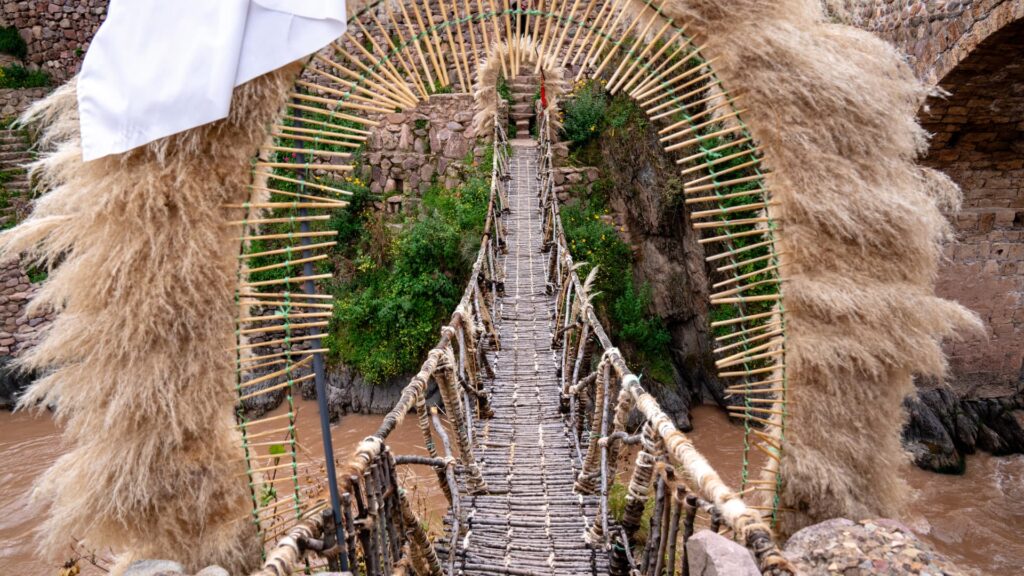

Local communities rebuilt the Q’eswachaka Inca bridge in the Quehue district of Cusco. Over a thousand residents from Winchiri, Qollana Quehue, Chaupibanda, and Chokayhua gathered to maintain this tradition. Residents build the structure entirely from plant fibers. They use techniques passed down for over five centuries. This bridge connects to the Qhapaq Ñan, the ancient Tahuantinsuyo road network.
The Rebuilding Process of the Q’eswachaka Inca bridge
The work began on July 2 with rituals for the Pachamama and the Apus. After these offerings, locals prepared the necessary building materials. Women, teenagers, and adults collected a local plant called “qoya.” Locals pounded these plant fibers with stones and soaked them in water. This process creates thick cords to support the 40-meter-long bridge. Quehue’s mayor, Walter Oroche Quispe, highlighted a specific challenge. He noted that placing heavy cords across the Apurimac River is very delicate. Traditional specialists and priests led ceremonies before the weaving started. They asked for protection and structural strength.
Overcoming Challenges to Preserve Heritage
Organizers initially scheduled the annual renewal for the third week of June. However, the project faced a temporary delay. Mayor Oroche Quispe explained the situation. Some participants requested financial payment from the Quehue Municipality. This demand led to immediate meetings with cultural authorities. The Cusco Directorate of Culture and Gercetur joined these talks. The groups reached an agreement to continue the work traditionally. This choice ensures the cultural meaning remains completely intact.
International Recognition and Local Tourism
The bridge’s historical value has gained strong institutional backing. The Peruvian government declared it a National Cultural Heritage site in 2009. UNESCO added it to the Intangible Cultural Heritage of Humanity list in 2013. These designations highlight the massive community effort. They also value the exclusive use of traditional, non-industrial materials. Mayor Oroche Quispe mentioned a steady growth in tourism. About 100 people visit the site daily. This number rises significantly on weekends. The site attracts international reporters from Belgium and Italy. Documentarians, anthropologists, and graduate students also visit frequently.
The bridge completion aligned with the 34th Q’eswachaka Folkloric Festival 2026. Authorities anticipated over two thousand tourists for the weekend events. The celebration featured 35 traditional dances and local food stalls. Travel agencies actively promoted nearby attractions. Visitors enjoyed rafting on the Apurimac River and experiential tourism. They also visited vicuña reserves and the Lord of Exaltation colonial temple. A new road project will soon shorten travel time from Cusco city.