We have curated a selection of insights into the extraordinary sites you will visit during your Machu Picchu Shortened Tour.
Chinchero: The Land of the Rainbow
Located at 3,754 meters (12,316 feet) above sea level, Chinchero is a captivating Andean town. It is often referred to as the "City of the Rainbow" due to the frequent atmospheric phenomena observed there. Chinchero was once the significant royal estate of Inca emperor Túpac Yupanqui. Today, the town is renowned for its vibrant Sunday market. Here, local weavers display intricate textiles, and traditional bartering still takes place. The main square features a beautiful Spanish colonial church built directly upon impressive Inca stone foundations, symbolizing the syncretism of cultures.
Maras: The Salt Mines of the Incas
The Maras salt mines present a truly astonishing landscape. Thousands of ancient salt evaporation ponds cascade down a hillside at an altitude of approximately 3,200 meters (10,500 feet). These mines have been in continuous use since pre-Inca times. A natural, hypersaline spring emerges from the mountain, filling each of the individual terraced ponds. As the water evaporates under the Andean sun, it leaves behind a pristine layer of valuable pink salt. This unique agricultural practice offers incredible photographic opportunities.
Moray: The Inca Agricultural Laboratory
The Moray archaeological site is an exceptional testament to Inca innovation and agricultural genius. Situated at aproximadamente 3,500 meters (11,500 feet) above sea level, Moray consists of several enormous, concentric circular terraces. These terraces descend deep into natural depressions in the earth. Each level of the terraces is believed to have created distinct microclimates. The Incas used these varying temperatures to experiment with different crops. This allowed them to adapt various plant species to the diverse Andean conditions. It showcases their advanced understanding of botany and sustainable farming practices.
Ollantaytambo: The Living Inca Fortress
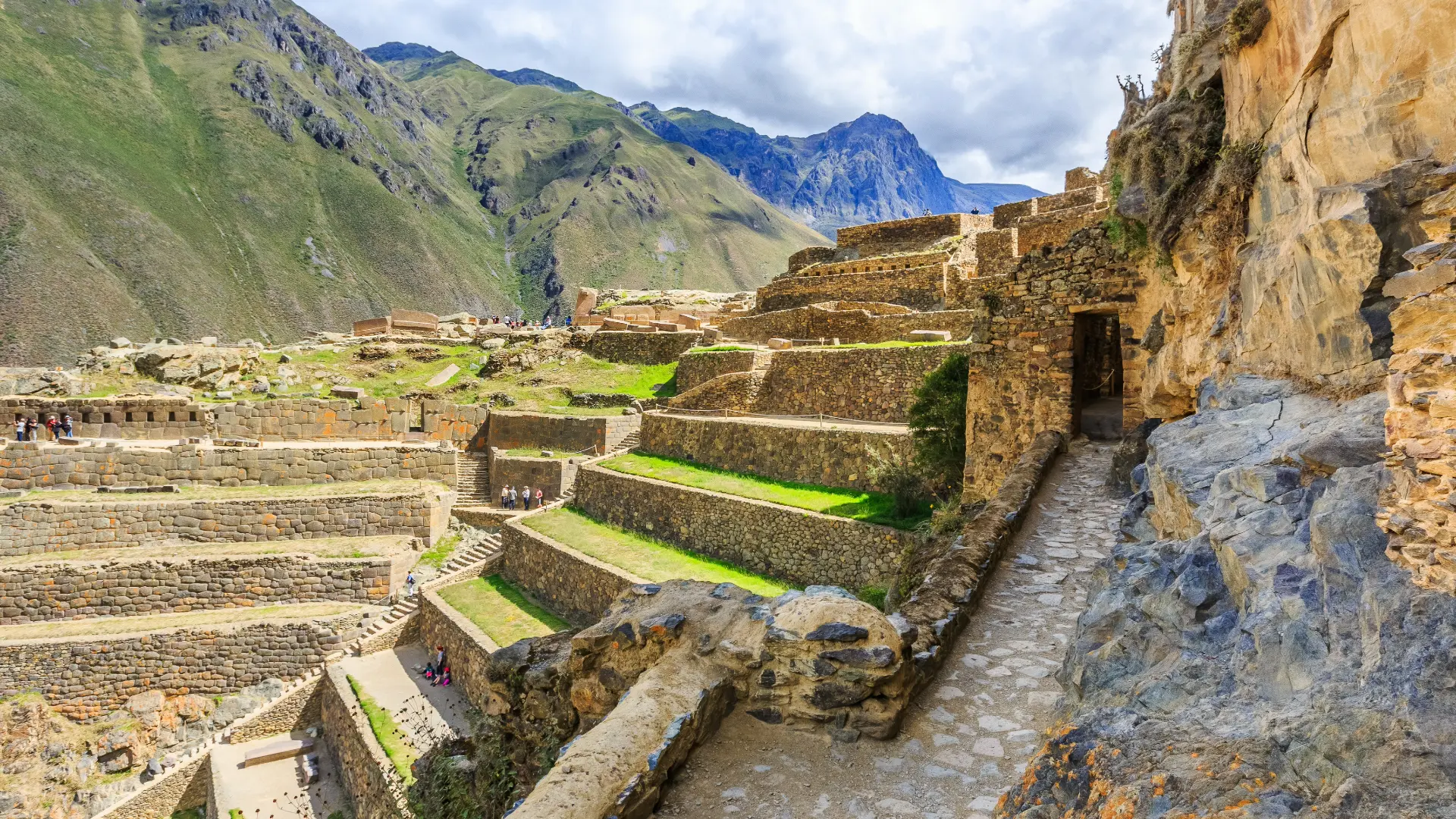
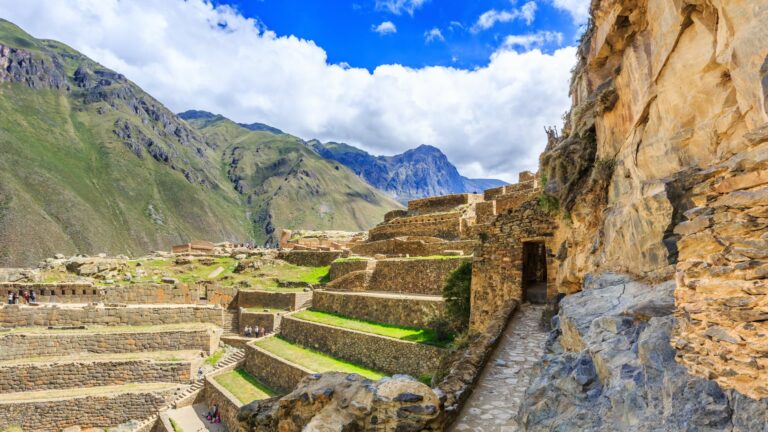
Ollantaytambo, located in the Sacred Valley at 2,792 meters (9,160 feet), is a unique and remarkably well-preserved Inca town and archaeological site. It is often called a "living Inca fortress." Built by Emperor Pachacuti in the 15th century, it served as a royal estate, ceremonial center, and military stronghold. Its impressive stone terraces and formidable fortifications were the setting for a major victory against the Spanish conquistadors. The town's original grid-like Inca layout, with its narrow cobbled streets and water channels, is still remarkably intact and inhabited today. It stands as a UNESCO World Living Museum.
Sacsayhuaman: The Fortress at the Head of the Puma
Perched dramatically above the city of Cusco at 3,700 meters (12,139 feet), Sacsayhuaman is an awe-inspiring Inca fortress. It forms the head of the puma, which the Inca believed represented the shape of Cusco. This monumental construction is a masterpiece of megalithic architecture. Its massive, zigzagging walls are composed of immense, perfectly fitted stone blocks, some weighing over 100 tons. These were moved and assembled with incredible precision without the use of mortar. Sacsayhuaman served both military and religious purposes. It hosts the vibrant Inti Raymi (Festival of the Sun) celebration each June.
Qoricancha: The Temple of the Sun
Qoricancha, meaning "Golden Enclosure," was the most sacred and important temple in the entire Inca Empire. Located in the heart of Cusco, it was dedicated primarily to Inti, the sun god, but also housed temples for the moon, stars, rainbow, and lightning. The temple walls were famously adorned with sheets of solid gold and silver. After the Spanish conquest, much of Qoricancha was dismantled, and the Church and Convent of Santo Domingo were built directly on its foundations. This striking architectural blend highlights the clash and fusion of Inca and colonial cultures. It stands as a powerful symbol of spiritual continuity.
Q'enqo: The Sacred Labyrinth
Q'enqo is a mysterious and fascinante archaeological site situado just a few kilometers outside of Cusco, at approximately 3,580 meters (11,745 feet) above sea level. Its Quechua name means "labyrinth" or "zigzag," referring to the intricate channels and carvings within its massive limestone rock formations. Scholars believe Q'enqo was an important ceremonial center used for rituals, sacrifices, and astronomical observations. The site features a series of underground passages, an impressive carved amphitheater, and altars. It reflects the Incas' deep spiritual connection with nature and their sophisticated understanding of sacred spaces.