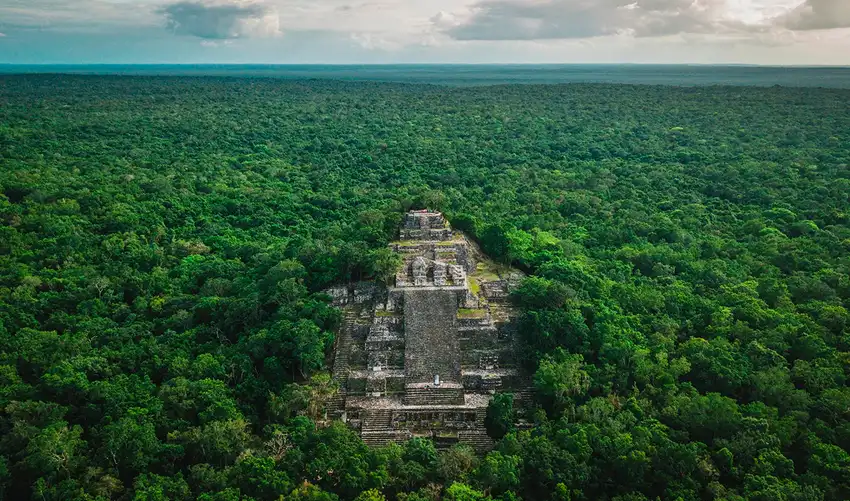

Archaeologists recently discovered a hidden Maya city within the Calakmul Biosphere Reserve. The settlement sits in Campeche, Mexico. This urban center remained untouched for over 1,000 years. Researchers named the site Minanbé. In Yucatec Maya, this term means ‘there is no road’. A joint Mexican-Slovenian research group identified the location.
Decades of Archaeological Progress
This discovery followed decades of scientific research. Experts focused their studies on the Central Maya Lowlands. Between 600 and 900 AD, this region supported millions of people. Researchers conducted extensive aerial scanning to find the site. Consequently, they identified buried structures from above. The team spent significant time analyzing the remote terrain before starting their expedition.
Reaching the Ancient Settlement
The ancient ruins rest in a very remote area of the reserve. Dense vegetation and a lack of forest roads concealed the site effectively. Archaeologists cleared a path through the jungle for five kilometers. Afterward, they continued their journey using off-road vehicles and on foot. Ivan Šprajc from the Slovenian Academy of Sciences led the team. He noted that accessing this specific location was extremely challenging. Nevertheless, the site arrived in excellent condition. It is the first location found completely intact without any signs of looting.
Advanced Technology Assists Discovery
The National Institute of Anthropology and History authorized this exploration. Researchers utilized aerial LiDAR technology to detect the archaeological structures. This remote sensing tool uses laser beams to see beneath the dense forest canopy. The resulting data revealed a large settlement covering approximately 15 hectares. Later, field exploration confirmed the presence of large plazas and ceremonial structures. Additionally, the team identified palatial buildings, stone terraces, and a sophisticated water management system. These features demonstrate the high level of engineering skill possessed by the ancient inhabitants.
Architectural Wonders and Regional Importance
Among the findings, a tall pyramidal temple stands out. This structure rises over 13 meters high. It features distinctive architectural elements from the Río Bec style. For instance, builders used finely crafted masonry and steep stairs. They also added decorative panels and upper moldings. Archaeologist Vitan Vujanović registered a well-preserved temple. This structure is directly associated with a glyph-bearing stela. The site contains 14 stelae and altars in total. Therefore, the area likely held significant regional importance during its peak. Future excavations will continue to provide more information about the people who built this remarkable place.