
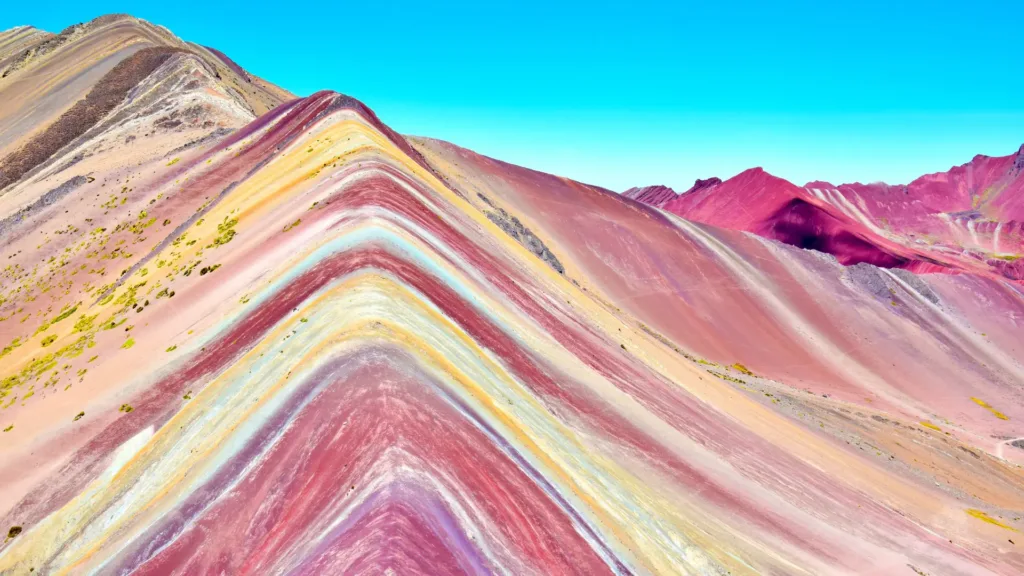
Social media often portrays Rainbow Mountain as an effortless, highly photogenic day trip from Cusco. While the colorful mineral stripes and friendly alpacas are real, the physical reality of the trek is much more demanding. The trail ends at an altitude of over 17,000 feet, where low oxygen levels and unpredictable alpine weather turn a standard walk into a serious physical test.
The most common mistake travelers make is assuming that the trail’s popularity means it is easy. Many tourists book cheap, last-minute tours immediately after arriving in Cusco, without giving their bodies time to acclimate. Attempting this steep climb without proper preparation frequently leads to severe altitude sickness, extreme exhaustion, and hikers needing to turn back before even reaching the viewpoint.
To prevent these issues, we have compiled the most common questions our guides receive on the ground. This guide delivers clear, factual details on trail conditions, actual costs, horse rental options, and seasonal weather patterns. Use this information to plan a safe, realistic itinerary for your trek.
Rainbow Mountain, locally known as Vinicunca, is a mountain ridge in the Peruvian Andes. Its distinct turquoise, golden yellow, lavender, and terracotta stripes are the result of weathering and mineral sediment deposits—including iron, sulfur, and magnesium—that accumulated over millions of years. Tectonic shifts later pushed these flat sediment layers upward, creating the inclined stripes visible today.
The main viewing platform sits at 17,060 feet (5,200 meters) above sea level. The trailhead where you begin the hike is located at approximately 15,090 feet (4,600 meters).
The hike is rated as moderate to challenging. While roughly 80% of the trail follows a gentle, steady incline, the final 20% is a steep uphill climb. The primary difficulty comes from the thin air and lack of oxygen at this altitude, which makes physical exertion feel twice as hard as it would at sea level.
On average, the hike up to the viewpoint takes 1.5 to 2 hours. The descent back to the trailhead takes about 1 hour, making the total hiking time roughly 3 hours.
If you take the standard Cusipata route, the round-trip distance is approximately 4.3 miles (7 kilometers) in total—roughly 2.15 miles each way.
For international travelers, the entrance fee is 25 PEN (approximately $7 USD). For Peruvian citizens, the fee is 15 PEN. Most day tours from Cusco include this ticket in their overall price, but you should confirm this with your operator.
The dry season, which runs from May to October, offers the best conditions. During these months, you can expect clear skies, plenty of sunshine, and dry trails, which make the colors on the mountain look much sharper and brighter.
Yes, but it is risky. From November to April, rain, fog, and snow are common. If it snows heavily, the entire mountain will be covered in white, meaning you will not see the colors. Rain also makes the dirt trail muddy and slippery.
The single most important step is to spend at least two full days adjusting to the altitude in Cusco (11,152 feet) before attempting the hike. Drink plenty of water, avoid alcohol and heavy meals before the trek, and consider drinking local coca leaf tea or taking over-the-counter altitude medication.
Yes. Local community members offer horse rentals at the start of the trail and along the path. A one-way ride up the mountain costs between 60 and 80 PEN ($16 to $22 USD). Note that horses cannot go up the final steep ridge for safety reasons, so you will still need to walk the last, most difficult stretch.
Most group tours start very early. Operators pick you up from your hotel between 3:30 AM and 4:00 AM. You will drive about three hours to the trailhead, hike, have lunch, and return to Cusco between 4:30 PM and 5:30 PM.
You should dress in layers. Temperatures can be freezing at dawn and very warm by midday. Wear a thermal base layer, a fleece jacket, a windproof and waterproof outer shell, hiking pants, and sturdy trail shoes or boots. Bring sunglasses, a warm beanie, gloves, sunscreen (SPF 50+), and a rain poncho.
It is not recommended for children under 8 years old or for anyone with pre-existing heart or respiratory conditions. The extreme altitude can cause rapid physical distress if your body is not fully acclimated.
Yes, basic toilet facilities (dry pit latrines) are available at the trailhead and at a few points along the path. They are managed by the local community, and there is a small fee of 1 to 2 PEN to use them. You should bring your own toilet paper and hand sanitizer.
Most registered tour companies include a basic buffet breakfast and buffet lunch at local, rustic restaurants in the villages of Cusipata or Pitumarca before and after the hike.
A small, lightweight daypack (15 to 20 liters) is perfect. You only need enough space to carry water, snacks like chocolate or dried fruit, your passport, camera, sunscreen, and any layers of clothing you take off during the hike.
No. Cell service is virtually non-existent along the trail and at the summit. You should plan on being completely offline for the duration of the day trip.
Yes, you can hire a private taxi or take public buses from Cusco to Cusipata and then find a local colectivo to the trailhead. However, booking an organized tour is usually more cost-effective, saves time, and ensures you have a guide with emergency medical equipment and supplemental oxygen.
Vinicunca is the classic, more famous mountain with a sharper peak and steeper hike. Palccoyo is an easier alternative located at a slightly lower altitude (16,000 feet). The walk at Palccoyo is mostly flat, takes only 40 minutes, offers views of three different colorful mountains, and has far fewer crowds.
Yes, but you must ask the local community guides at the entrance first. Some communities charge a small permit fee (around 10 to 20 PEN) to fly drones. Make sure to keep the drone at a safe distance from other tourists and the local alpacas to avoid disturbing them.
Leave a Reply