
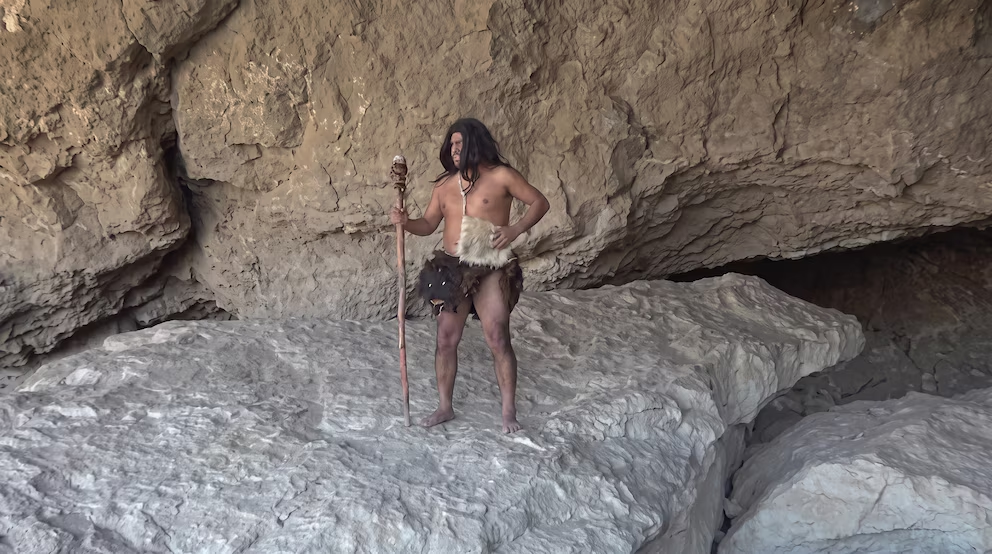

A team of researchers recently made significant discoveries during the latest Pikimachay archaeological excavations in the Ayacucho region. Between June and August 2026, specialists found stone instruments and remains of Pleistocene fauna right outside the famous cave in the Pacaycasa district. The regional government sponsored this field research to prepare the site for a new tourism project and properly map the historical boundaries.
Uncovering Ancient Stone Tools and Fauna
Lead archaeologist José Ochatoma explained that his team focused on small rock shelters outside the main cavern. This specific area matches the exact location where authorities plan to build tourist walkways. During their fieldwork, experts recovered multiple stone tools, including scrapers, punches, and projectile points. Since the raw materials—such as quartz, basalt, and flint—do not exist naturally in the immediate area, researchers know that early humans transported them from different territories.
Alongside these instruments, the crew found animal bones dating back to the Pleistocene era. One specific bone likely belongs to a giant sloth. Finding these items confirms that ancient groups used the cave exterior as a designated workspace to craft weapons, cut vegetation, and prepare animal skins. If you enjoy reading about ancient Peruvian history, you might also like our recent article on the San Isidro archaeological find discovered during utility works in Lima.
Resolving Historical Debates and Dating
For decades, the exact age of early human settlements in Peru has sparked intense scientific debate. Back in the late 1960s, American researcher Richard MacNeish proposed that humans occupied the Ayacucho area up to 22,000 years ago. However, many experts questioned his claims, arguing that his supposed artifacts were simply naturally broken rocks that fell from the ceiling.
Ochatoma notes that the artifacts from the 15,000-year mark offer much stronger evidence. Since these stones came from foreign locations and show clear signs of human modification, they validate the timeline of early Andean populations. After finishing the fieldwork, scientists will conduct radiocarbon testing on bone and charcoal samples to secure precise dates. This process mirrors the meticulous research currently happening at the Pacatnamu archaeological discoveries site in northern Peru.
Boosting Tourism and Local Heritage
Unlike previous expeditions where foreign institutions kept the artifacts, the items recovered during the current Pikimachay archaeological excavations will remain entirely in Ayacucho. The Ministry of Culture will inventory every piece before transferring them to the Regional Museum to strengthen local identity.
Simultaneously, the local government is building a two-story interpretation center near the highway. To prevent accidents from falling rocks, visitors will no longer enter the cave directly. Instead, they will view the historic site safely from a newly installed exterior platform. The Pacaycasa community actively participates in this construction, hoping that the upgraded infrastructure will boost the local economy and support regional artisans.

Leave a Reply