
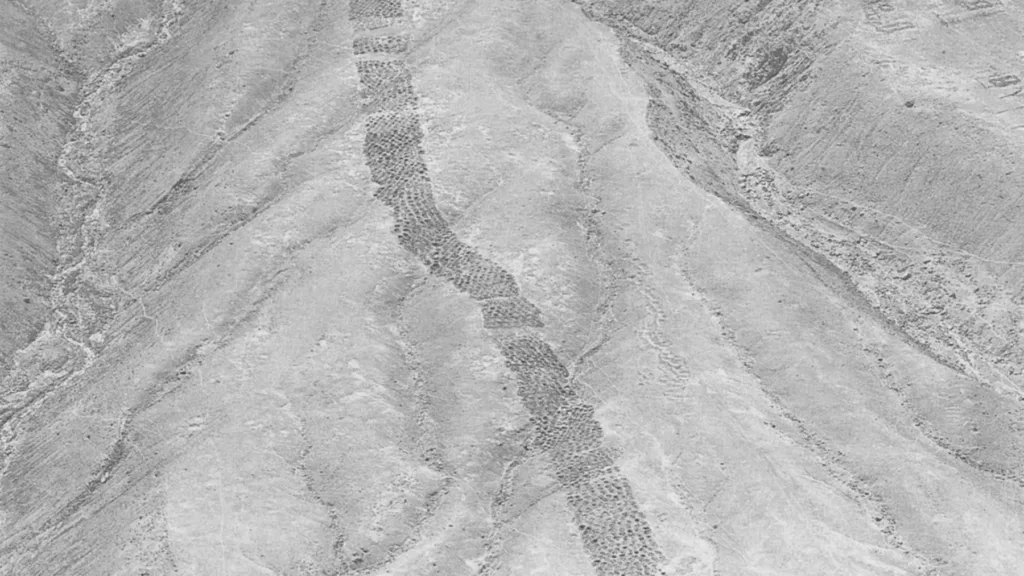

The recent Monte Sierpe archaeological drone study brings new answers about 5200 strange holes carved into the Pisco valley in Peru. Australian scientists mapped this massive area from the 14 century to understand its original purpose. They discovered that the site remained active during the Inca empire. This research provides solid evidence about how pre-Hispanic societies managed taxes and trade.
Mapping 5200 Holes in the Pisco Valley
The team measured cavities that span 1.5 kilometers along the hills, located exactly 35 kilometers from the Pacific Ocean. Each hole measures between 1 and 2 meters across and drops 0.5 to 1 meter deep. Radiocarbon dating proves workers built the structures between 1320 and 1405. The University of Sydney led the Monte Sierpe archaeological drone study, publishing their data in Antiquity magazine in November 2025.
Researchers used a modern DJI Mavic 3E device paired with a highly accurate GNSS system to map the entire location. Because of this technology, they spotted clear numerical patterns. The holes form 60 distinct sections. Some groups feature 9 rows of 8 cavities, while others alternate between 7 and 8.
Uncovering the Dual Function of the Site
Lead author Jacob L. Bongers explained that the site served 2 different purposes over time. Initially, during the Chincha Kingdom era, it operated as a bustling regional market. The society had over 100000 citizens, including 10000 fishermen, 10000 farmers, and 6000 merchants. They used the location to trade goods across ecological zones.
Later, the Inca empire repurposed the area for strict tax accounting. The physical layout matches a khipu found nearby, which contains 80 cord groups holding 10 to 12 strings each. This mathematical structure allowed administrators to track tribute payments easily. You can compare this highly organized administration with other recent discoveries on the coast, such as the San Isidro archaeological find in Lima.
Pollen Samples and Ancient Ceramics
To confirm their theories, the team collected 21 soil samples. They extracted 19 from inside the cavities and 2 from outside areas. Laboratory tests identified 27 specific pollen types. Scientists found traces of cotton, peppers, sweet potatoes, and squash. Specifically, corn pollen appeared in 6 separate samples, proving human trading activity since corn rarely spreads its pollen naturally.
The excavation also recovered reed materials used for baskets and Andean willow wood meant for structural support. Ceramic fragments found on the ground belonged to both the early Chincha style and the later Inca period. All these clues confirm the area operated as an organized economic hub for generations.
Leave a Reply