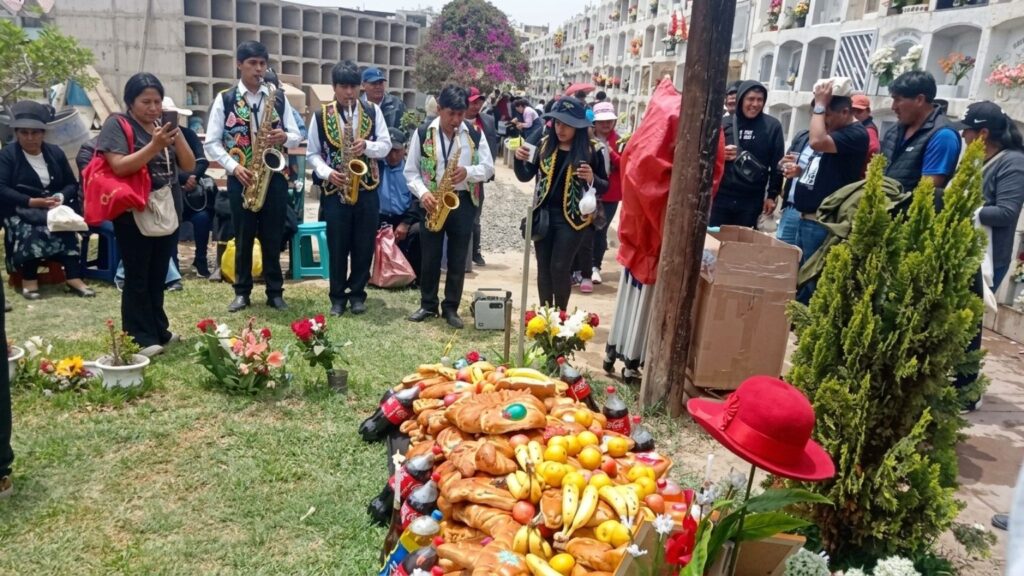

The Day of the Dead in Peru is celebrated primarily on November 1 and 2, when families remember their deceased loved ones through visits to cemeteries, flowers, prayers, and family gatherings. This tradition combines the influence of Catholic celebrations with Andean customs that have evolved over the centuries.
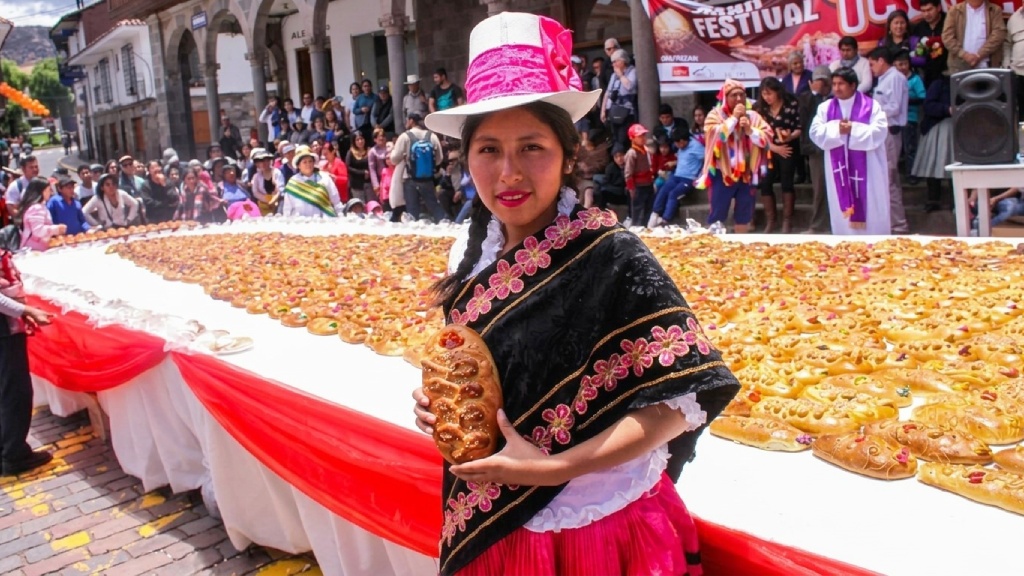
During this time, food also plays a special role. In Cusco and other Andean regions, t’anta wawas traditional breads shaped like babies—and bread horses stand out as part of family exchanges and local customs. Although there are similarities with Mexico’s Day of the Dead, Peru preserves its own cultural expressions, which vary from region to region.
Throughout the country, this celebration offers an opportunity to learn about traditions, discover local cuisine, and understand the relationship between history, religion, and family memory.
Behind this celebration lie stories, flavors, and customs that go far beyond what we see in the cemeteries. Discover the origins of the Day of the Dead in Peru, its traditional foods, and the different ways it is celebrated in each region. Some of these traditions might surprise you.
What is the origin of the Day of the Dead in Peru?
The origin of the Day of the Dead in Peru is linked to the ancient beliefs of the Andean peoples and the Catholic traditions introduced during the colonial era.
Ancient Andean Beliefs
Before the arrival of Europeans, Andean societies believed in life after death and in the spiritual presence of their ancestors. They believed that the deceased continued to be part of the community, so they performed rituals to honor them and maintain a connection with them.
Funeral practices included offerings, sacred burials, mummified bodies, and ritual ceremonies. It was believed that the ancestors protected and guided the living.
The Influence of Catholic Tradition
During the 16th century, Spanish colonization introduced Catholic celebrations such as All Saints’ Day (November 1) and All Souls’ Day (November 2), which gradually merged with ancestral Andean traditions.
This fusion gave rise to a religious syncretism in which Catholic beliefs and Andean spirituality coexist, shaping today’s celebrations in honor of the deceased in Peru.
When is the Day of the Dead celebrated in Peru?
The main dates are November 1 and 2. Although many people use the name “Day of the Dead” to refer to both days, each date has a specific meaning.
- November 1, All Saints’ Day: The saints are commemorated, and in many Peruvian communities, it is also an occasion to gather with family, share a meal, and bake traditional breads.
- November 2, All Souls’ Day: This day is especially dedicated to remembering and praying for the deceased. Many families visit cemeteries and bring flowers or offerings.
Note: November 1 is a national holiday in Peru. November 2 is not automatically a national holiday every year, so it’s a good idea to check the official calendar if you plan to travel during this time.
Main Traditions of the Day of the Dead in Peru
Customs may vary from region to region, but there are some representative practices that help explain the meaning of this celebration.
1. Visiting Cemeteries and Bringing Flowers
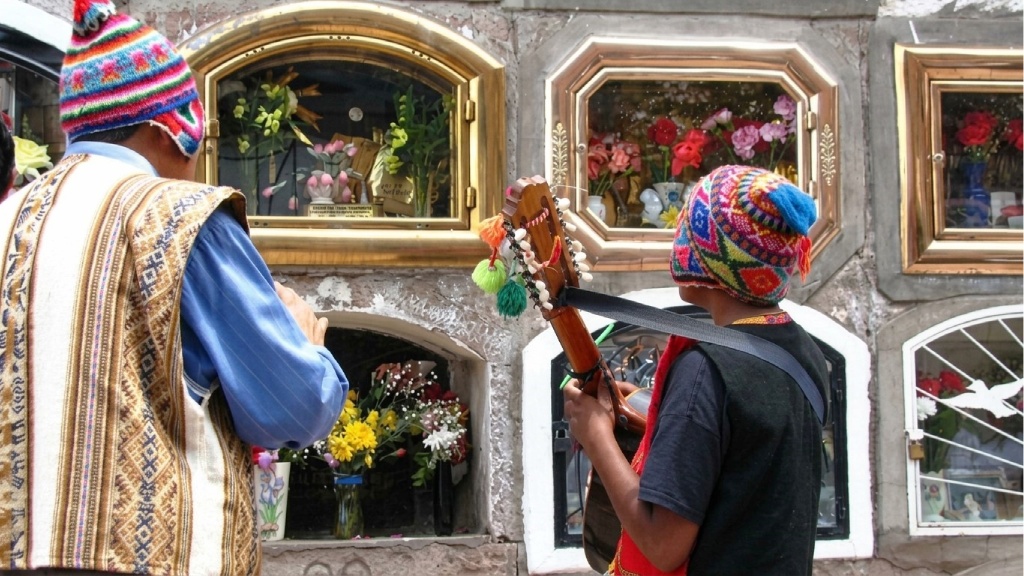
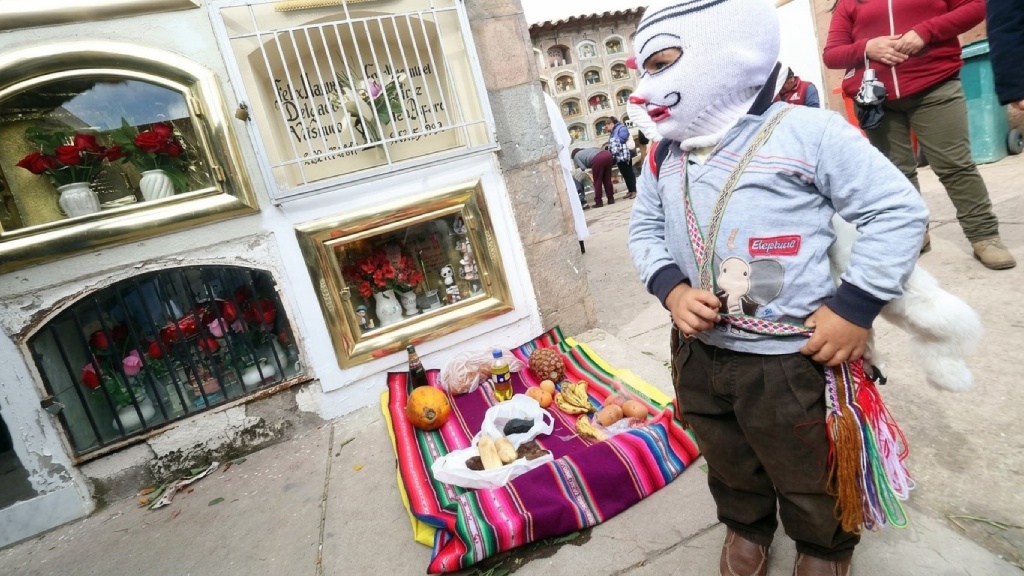
One of the most widespread traditions is visiting the graves of family members and loved ones. Families clean the gravesites, place flowers, pray, and take time to remember shared moments.
In some places, these visits also include food, music, and family gatherings. Regardless of regional differences, these moments help keep alive the memory of those who are no longer with us.
2. Sharing Food and Memories
Food plays an important role during this time of year. Some families prepare the favorite dishes of their deceased loved ones, while others share traditional recipes during their November gatherings.
These customs express affection, family unity, and cultural continuity. Their meaning and how they are practiced depend on the beliefs of each community.
3. Attending Masses and Saying Prayers
Many Catholic families attend Mass, say prayers, and participate in religious ceremonies dedicated to the deceased. These activities are complemented by family customs and local traditions.
Traditional Food for the Day of the Dead in Peru
Cuisine is one of the most interesting aspects of this celebration. Among the best known dishes from the Andean regions are the t’anta wawas and bread horses, though sweets and other traditional foods can also be found.
T’anta wawas: Traditional November Breads
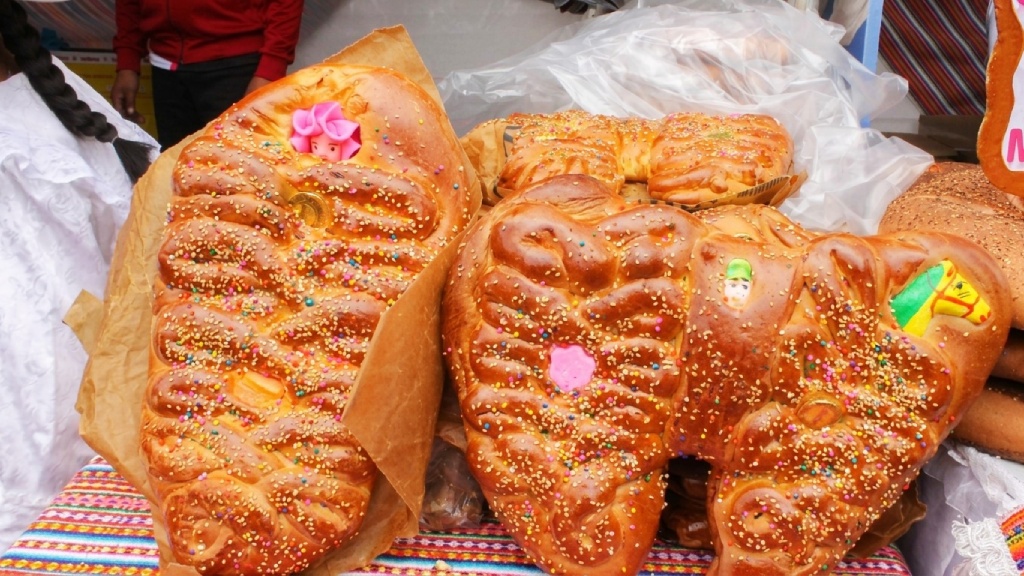
T’anta wawas are breads that are usually shaped like babies and decorated with sprinkles, raisins, sugar, or other ingredients, depending on the local recipe.
Their name comes from Quechua: “t’anta” means bread and “wawa” means baby or child. In addition to their culinary value, these figures represent an expression of folk creativity and customs passed down through generations.
Its history reflects the convergence of the tradition of wheat bread introduced by the Spanish and cultural interpretations related to ancient Andean recipes.
Bread Horses: A Cusco Tradition
In Cusco, bread horses are also part of the traditional All Saints’ Day preparations. They are made from bread dough, and their shapes and decorations depend on the creativity of each baker.
In some gift giving customs, bread horses have been associated with gifts for boys, while t’anta wawas are linked to other family and godparent godchild exchanges; they are one of the most recognizable culinary traditions of this season.
Other Traditional Foods
Depending on the region and family customs, suckling pig, tamales, sweets, and other dishes may also be shared during this time. There is no single menu for the entire country: each community preserves its own recipes and ways of celebrating.
How Is the Day of the Dead Celebrated in Cusco?
Cusco is one of the places where November traditions have a prominent cultural presence. Visits to cemeteries, the preparation of traditional breads, and family gatherings are among the customs that can be observed during this time of year.
Ayamark’ay Killa: Remembering the Deceased in Andean Tradition
Ayamark’ay Killa is a Quechua expression associated with the ancient Andean calendar and commemorations of the deceased. The Cusco Regional Office of Culture notes that this celebration dates back to pre-Hispanic times and is now associated with All Saints’ Day.
Cultural references linked to this tradition include the mallquis mummified bodies of ancestors which, according to historical sources, were sometimes the focus of ceremonies and processions in certain Andean societies.
In contemporary cultural representations, one can find references to these historical roots, as well as elements of Cusco’s folk tradition, including bread horses and t’anta wawas.
Visits to Cemeteries in Cusco
During the first days of November, many families visit cemeteries to lay flowers, pray, and remember their loved ones. These spaces become places for family gatherings and reflection.
If you visit a cemetery during this time, remember that it is an important space for families. Be respectful and ask for permission before photographing people or their ceremonies.
Food Fairs and Traditional Breads
Depending on the annual schedule, food fairs, contests, and cultural activities related to t’anta wawas and other traditional dishes may be organized.
If you travel to Cusco in November, you can visit the markets and traditional bakeries to learn about these breads, admire their decorations, and discover how they’re made.
How is the Day of the Dead celebrated in other regions of Peru?
Peru’s cultural diversity means that this commemoration takes on different forms depending on the location.
- Ayacucho: Families set up altars with flowers, candles, photographs, and t’anta wawas. At cemeteries, they gather to pray, sing in Quechua, and pay tribute to their deceased loved ones in an atmosphere of respect and spirituality.
- Puno: Families set up offering tables with t’anta wawas, fruits, and symbolic foods to honor their deceased loved ones. In some communities, these customs are accompanied by dances, processions, and ancestral practices linked to Andean spirituality.
- Lima: Families visit historic cemeteries, such as the Presbítero Maestro, and decorate the graves with flowers and personal mementos. Masses and cultural fairs are also held, where traditional sweets and pan wawa can be found.
- Other Andean regions: Customs may include traditional breads, family exchanges, and culinary preparations unique to each community.
On the coast and in the Amazon region, there are also diverse practices, shaped by local histories, beliefs, and traditions. Therefore, it is important to avoid generalizations and recognize that not all communities celebrate in the same way.
Differences Between the Day of the Dead in Peru and Mexico
Although both countries set aside special days to remember their loved ones, their celebrations differ culturally.
In Mexico, the Day of the Dead is known for various regional traditions, such as home altars, decorative skulls, and offerings unique to each community.
In Peru, highlights include visits to cemeteries, religious ceremonies, family gatherings, and especially in the Andes the t’anta wawas and bread horses.
Both countries share a strong emphasis on family memory, but each preserves symbols and customs that reflect its own history.
Frequently Asked Questions About the Day of the Dead in Peru
When is the Day of the Dead in Peru?
It is primarily celebrated on November 1 and 2, dates associated with All Saints’ Day and All Souls’ Day.
What foods are prepared during this celebration?
T’anta wawas and bread horses are traditional dishes from various Andean regions. People may also share tamales, roast suckling pig, maicillos, condesas, suspiros, sweet Cusco-style empanadas, sweets, and other regional foods.
What does “t’anta wawa” mean?
It is a traditional bread whose name in Quechua means “bread baby.” It is usually shaped like a child and features decorations that vary by region.
How is the Day of the Dead celebrated in Cusco?
Many families visit cemeteries, participate in prayers, and share traditional foods. T’anta wawas and bread horses stand out among the season’s culinary traditions.
Is November 2 a holiday in Peru?
It is not automatically a national holiday every year. November 1 is a national holiday for All Saints’ Day.
Conclusion: Traditions, food, and memories that keep Peruvian culture alive
The Day of the Dead in Peru brings together history, food, and family traditions. Families use these customs to remember their loved ones. The celebration also reflects Andean beliefs and Catholic traditions. Over the centuries, these traditions have become intertwined.
In Cusco, the t’anta wawas (bread horses), visits to cemeteries, and family gatherings are part of a tradition that continues to be passed down from generation to generation and reflects the region’s cultural identity.
If you visit Cusco during the first days of November, you’ll have the opportunity to discover its traditional breads, learn about its customs, and experience this celebration with respect and curiosity.
At Qosqo Expeditions, we invite you to discover Cusco beyond its landscapes through its traditions, history, and cultural richness. Are you thinking of visiting the region? write to us, and we’ll help you plan your next adventure.