
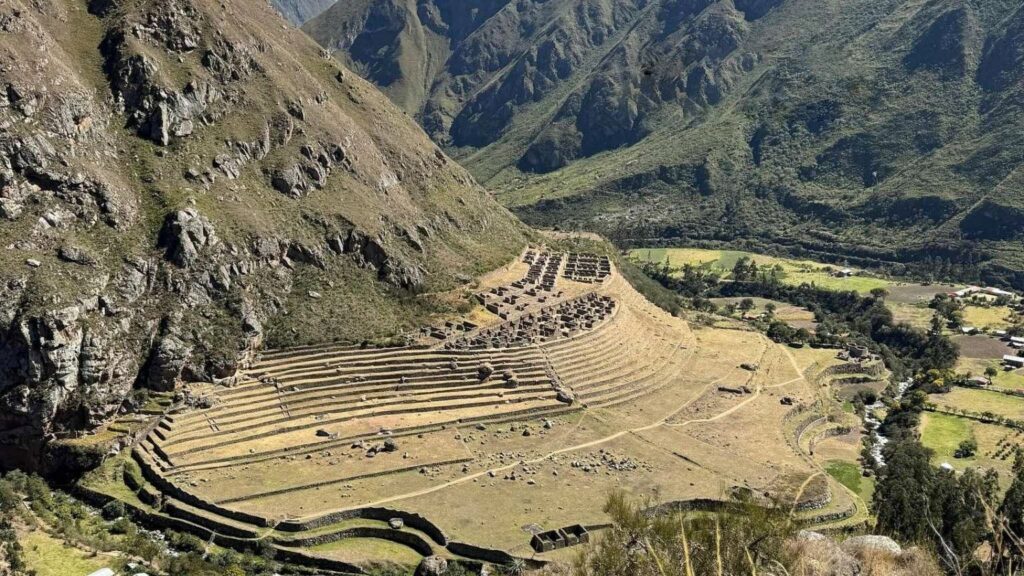

The Decentralized Directorate of Culture of Cusco joined forces with local villagers recently. Specifically, both groups worked together to protect the Lanlacuyoq archaeological site. This pre-Hispanic monument is located inside the Saqsaywaman National Archaeological Park. Consequently, this collaborative cleaning initiative marks a major milestone for participatory heritage management.
Community Clean-Up and Heritage Preservation Work
During the fieldwork, participants completed essential cleaning and maintenance tasks. First, workers carefully removed invasive weeds from ancient stone structures. Next, volunteers collected solid waste accumulated around the perimeter. Furthermore, maintenance crews thoroughly cleaned the upper sections of pre-Hispanic walls. Therefore, these preventive actions directly protect stone foundations from ongoing weathering and human pressure.
Members of the Huayllarcocha peasant community took an active role in every activity. For example, community members worked alongside professional conservators and site maintenance personnel. Together, they preserved both the archaeological structures and the surrounding Andean landscape.
This local initiative complements broader heritage efforts, such as the famous warachikuy festival at Sacsayhuaman celebrated nearby.
Participatory Management and Renewed Institutional Cooperation
In addition, this joint campaign represents a renewed alliance between both institutions. Previously, cultural officials and the Huayllarcocha community experienced a period of estrangement. However, open dialogue successfully restored institutional trust and mutual cooperation.
José Luis Valdez Ttito, president of the Huayllarcocha community, emphasized the value of mutual respect. He stated that constructive dialogue strengthens direct community involvement in heritage guardianship.
Likewise, Francisco Solís, head of the Saqsaywaman working team, highlighted community participation. He noted that shared responsibility is essential for modern archaeological stewardship. Thus, institutional coordination ensures sustainable heritage protection for future generations.
To learn more about regional preservation decrees, visit the Cusco Directorate of Culture official website. Ultimately, collaborative stewardship guarantees long-term protection for ancestral Andean sanctuaries across Cusco.