
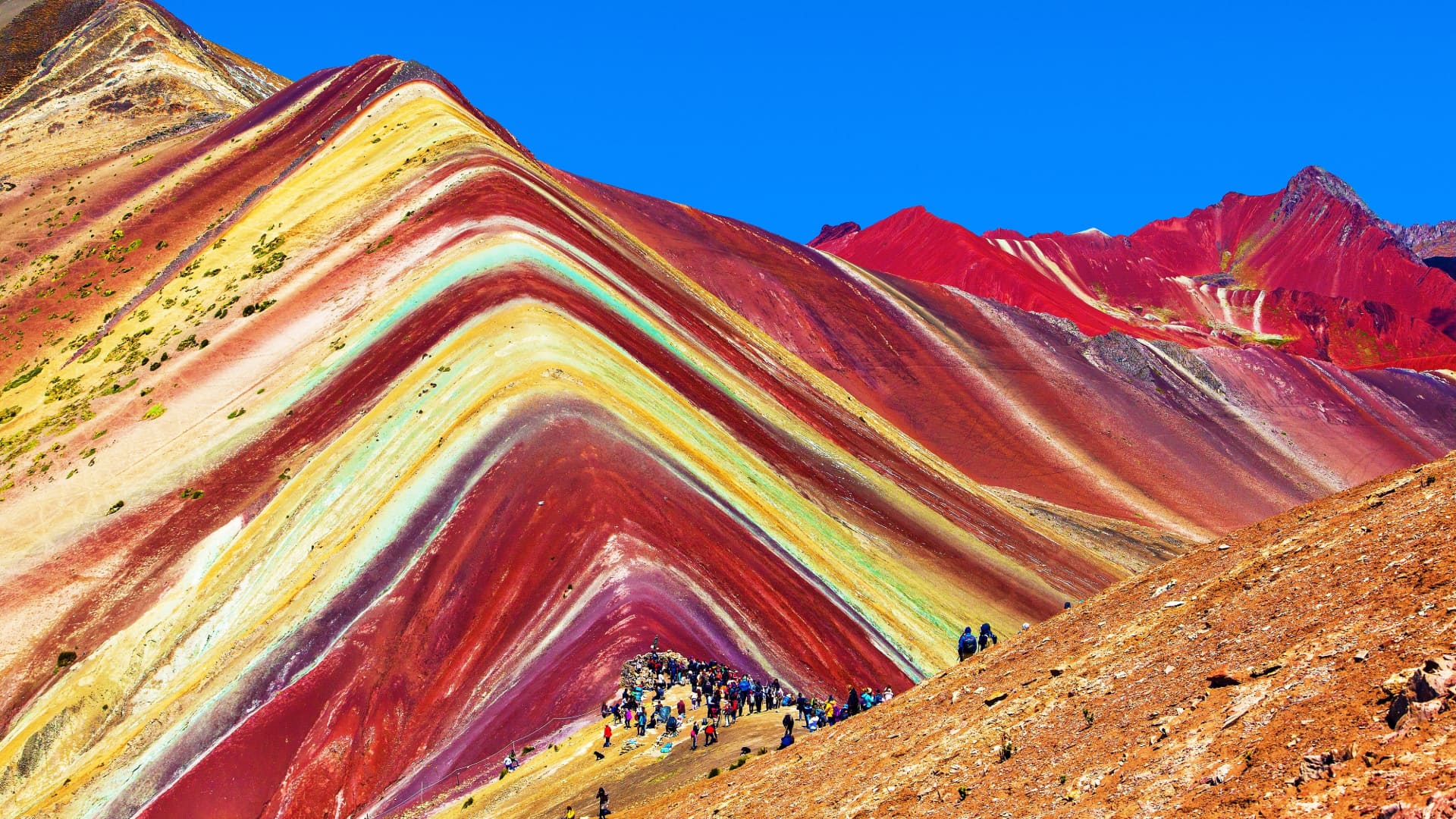
Rainbow Mountain is one of Peru’s most iconic natural landmarks. Tourists flock to this destination for its altitude and breathtaking views, but especially for its vibrant, multicolored slopes. These striking hues are not painted or artificial, they were shaped by geological forces over millions of years. By learning how these colors formed, travelers can appreciate Rainbow Mountain not just for its beauty, but for its deep geological and cultural significance.
Why Does Rainbow Mountain Have So Many Colors?
The vivid colors of Rainbow Mountain result from mineral layers exposed over time by tectonic activity and erosion. Each color reflects a specific mineral:
- Red and pink come from iron oxide in the soil.
- Green bands reflect the presence of chlorite and other iron-magnesium minerals.
- Yellow shades indicate compounds rich in sulfur, found in sandstone.
- White and cream tones suggest quartz and calcium carbonate from marine deposits.
- Purple hues are caused by manganese and ancient volcanic rocks.
Tectonic forces lifted these layers. Rain, wind, and time gradually revealed them, creating the stunning visual effect we see today.
Rainbow Mountain as a Geological Archive
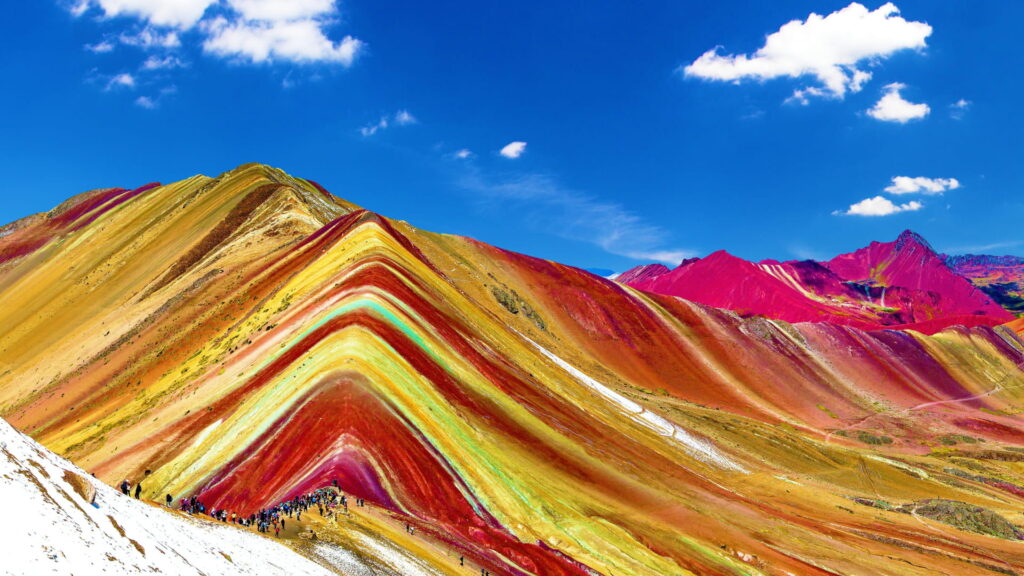
Rainbow Mountain tells a silent story written in stone. Each stripe marks a different period in the Earth’s natural timeline. Long ago, many of these minerals settled in oceans and lakes. Over millions of years, they hardened into rock layers. The collision of tectonic plates pushed them upward.
Today, visitors can see this geological history on full display. Scientists continue to study the layers to understand ancient climates and Earth’s formation. Hikers, meanwhile, admire the beauty shaped by those very forces.
When to See the Colors at Their Best
The best time to visit Rainbow Mountain is during the dry season, between April and October. Clear skies and dry conditions make the colors brighter and easier to photograph. During the rainy season, clouds often reduce visibility. Wet soil can also darken the tones.
Early morning and late afternoon are ideal for seeing strong contrasts between colors. Low sunlight angles highlight the layers, making each stripe more defined.
Responsible Travel and Protection
Heavy tourism affects Rainbow Mountain. The layers are delicate and can wear away under constant foot traffic. Visitors must stay on marked trails. Local guides and communities actively protect the area. They manage visitor flow, educate tourists, and support eco-friendly travel practices.
To help preserve the mountain, hikers should follow local guidance, avoid stepping on the mineral bands, and pack out all trash.
A Natural Masterpiece in the Andes
Rainbow Mountain stands as proof of Earth’s slow but powerful transformations. Its colors were not added by humans, but formed naturally over time. Wind, water, and pressure built this masterpiece layer by layer.
Visiting the mountain offers more than a great photo. It offers perspective. Each stripe tells a part of the Earth’s story , a visual reminder of the forces that shape our planet.

chat_bubble_outline Leave a Reply