
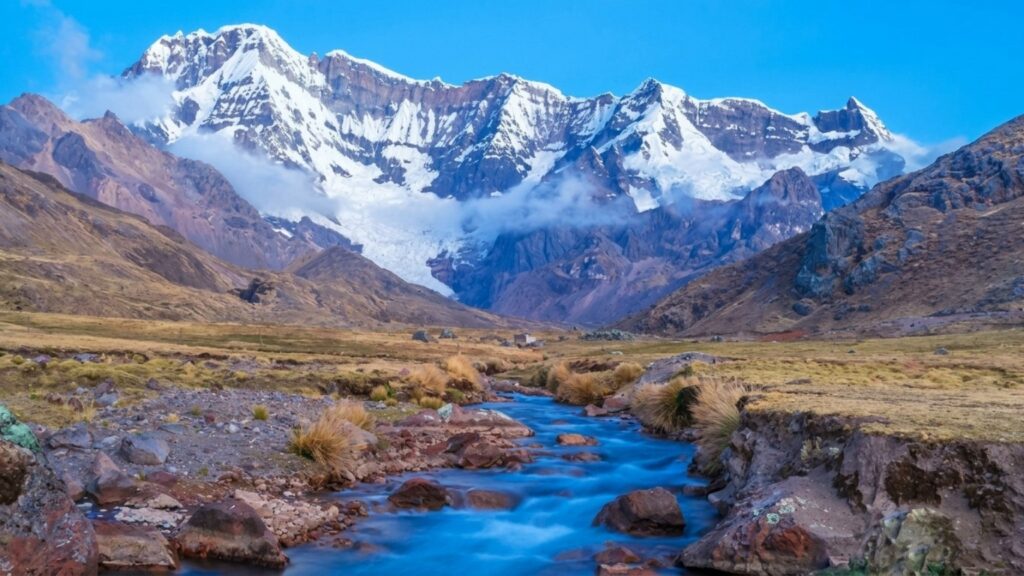

The Ausangate Trek is one of the most challenging hiking routes in Cusco. Over the course of five days, you’ll traverse remote landscapes, colorful lakes, Andean valleys, and trails surrounded by the glaciers of the Vilcanota mountain range. Along the way, you may also encounter alpacas, llamas, and small communities that preserve their traditions.
But just how demanding is this adventure, really? It’s important to understand the difficulty of the Ausangate Trek before setting out on the journey. The route reaches an elevation of 5,200 meters (17,060 feet) at the Palomani Pass, includes daily hikes of up to 16.5 kilometers (10.25 miles), and can require up to 9 hours of walking in a single day.
Understanding the distances, elevation changes, and necessary physical preparation will help you know what to expect on each day and better enjoy this five-day adventure.
How difficult is the Ausangate Trek?
The Ausangate Trek is considered a demanding or high-difficulty route. Its main challenge is not just walking for several hours, but doing so at high altitude, where the body receives less oxygen and must exert greater effort to maintain a steady pace.
Unlike other hikes that allow you to descend to lower elevations after crossing a mountain pass, the classic Ausangate circuit remains at high altitude for several days. For this reason, even people who are used to hiking may experience fatigue.
Why is the Ausangate Trek considered difficult?
There are four main factors that explain its level of difficulty:
- Altitude: Hiking above 4,000 meters (13,123 feet) can cause fatigue, shortness of breath, and symptoms related to altitude sickness.
- Elevation Gains: Some sections involve prolonged ascents to high-altitude mountain passes.
- Duration: Multi-day treks may include days with six to nine hours of hiking, depending on the route and the group’s pace.
- Weather: Low temperatures, wind, rain, and possible snowfall can make the trek more challenging.
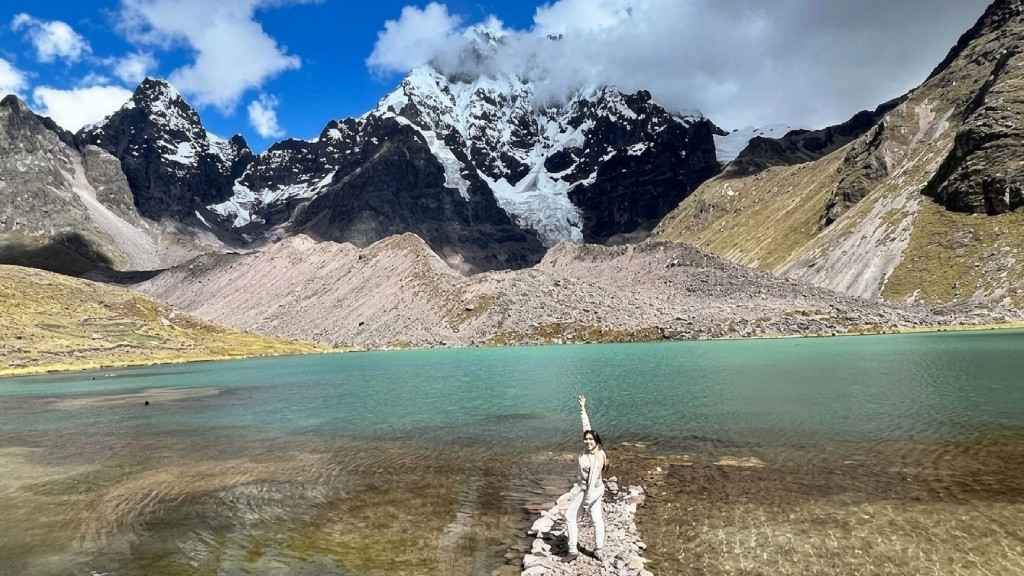
Altitude of the Ausangate Trek: At what elevation does the trek take place?
Altitude is one of the factors that most influences the difficulty of the Ausangate Trek.
Over the course of five days, you’ll hike through areas located above 4,000 meters (13,123 feet) above sea level. You’ll also cross mountain passes that exceed 5,000 meters (16,404 feet).
At these altitudes, some people may experience fatigue, rapid breathing, headaches, or difficulty sleeping. That’s why it’s important to arrive in Cusco with enough time to acclimate before starting the trek.
Major Altitudes Along the Route
| Location or Point on the Route | Approximate Altitude |
| Tinke | 3,800 m (12,467 feet) |
| Upis | 4,250 m (13,944 feet) |
| Upis Hot Springs | 4,400 m (14,436 feet) |
| Huayna Ausangate Lake | 4,600 m (15,092 feet) |
| Arapa Pass | 4,800 m (15,748 feet) |
| Hatun Pucacocha Camp | 4,500 m (14,764 feet) |
| Ausangate Pass | 4,750 m (15,584 feet) |
| Palomani Pass | 5,200 m (17,060 feet) |
| Huchuy Phinaya | 4,650 m (15,256 feet) |
| Sorapata Camp | 4,700 m (15,420 feet) |
| Jampa Pass | 5,070 m (16,634 feet) |
| Pacchanta Departure Point | 4,100 m (13,451 feet) |
Note: Altitudes are approximate and correspond to different points along the route, not necessarily to the highest elevation reached each day. When planning your acclimatization, pay special attention to the mountain passes and the elevations at which you will be sleeping.
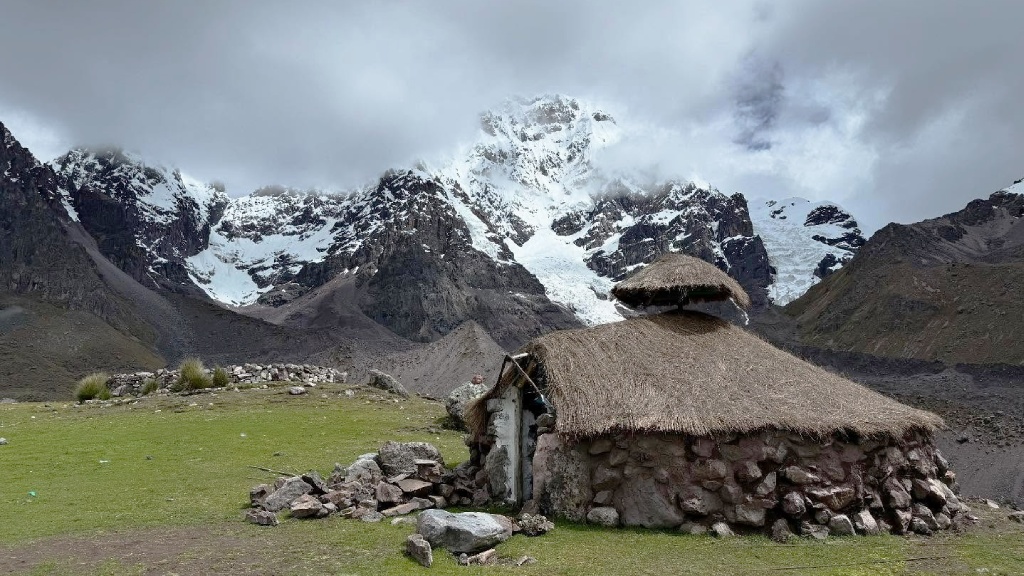
Distance, Elevation, and Difficulty of the 5-Day Ausangate Trek
The Ausangate Trek covers approximately 55.5 kilometers (34.49 miles) of hiking, spread over several days through the Vilcanota Mountain Range. Along the way, you’ll reach mountain passes at elevations exceeding 5,000 meters (16,404 feet).
Here are the main details for each day:
| Day | Distance | Hiking Time | Maximum Altitude | Difficulty |
| Day 1: Upis – Hot Springs – Huayna Ausangate Lake | 10 km (6.21 mi) | 5 – 6 hours | 4,400 m (15,748 ft) | Moderate |
| Day 2: Upis – Arapa Pass – Hatun Pucacocha | 11 km (6.84 mi) | 6 hours | 4,800 m (15,748 ft) | Moderate |
| Day 3: Hatun Pucacocha – Palomani Pass – Sorapata | 16,5 km (10.25 mi) | 9 hours | 5,200 m (17,060 ft) | Hard |
| Day 4: Sorapata – Jampa Pass – Pacchanta | 11 km (6.84 mi) | 5 – 6 hours | 5,070 m (16,634 ft) | Moderate |
| Day 5: Pacchanta – Tinke | 7 km (4.35 mi) | 3 – 4 hours | 4,100 m (13,451 ft) | Easy |
Which day is the most challenging?
The third day is the most challenging of the trek, covering 16.5 kilometers (10.25 miles) and taking approximately nine hours of hiking. Additionally, during this day you’ll reach Palomani Pass, located at 5,200 meters (17,060 feet) above sea level, the highest point of the entire expedition.
On the other hand, the first, second, and fourth days are moderately difficult, while the fifth day is easier, with approximately three to four hours of hiking.
Important: Although some days are classified as moderate or easy, the altitude can significantly increase the physical effort required. Therefore, it is essential to arrive well acclimated and in good physical condition.
What level of fitness do you need to complete the Ausangate Trek?
To complete the Ausangate Trek, it’s recommended that you be in good physical condition and prepared to hike for several hours in mountainous terrain.
We recommend focusing especially on the following areas:
- Cardiovascular endurance: walk, jog lightly, swim, or ride a bike to improve your aerobic capacity.
- Leg strength: Perform exercises such as squats, lunges, and climbing stairs.
- Muscular endurance: Get used to walking for several hours without tiring quickly.
- Backpacking training: Practice hiking while carrying a backpack with the weight you’ll be carrying during the trek.
- Mountain hikes: If you have the opportunity, hike trails with elevation changes to get used to ascents and descents.
A gradual training program spanning several weeks can help you better handle the physical exertion. However, being in good shape does not eliminate the risk of altitude sickness.
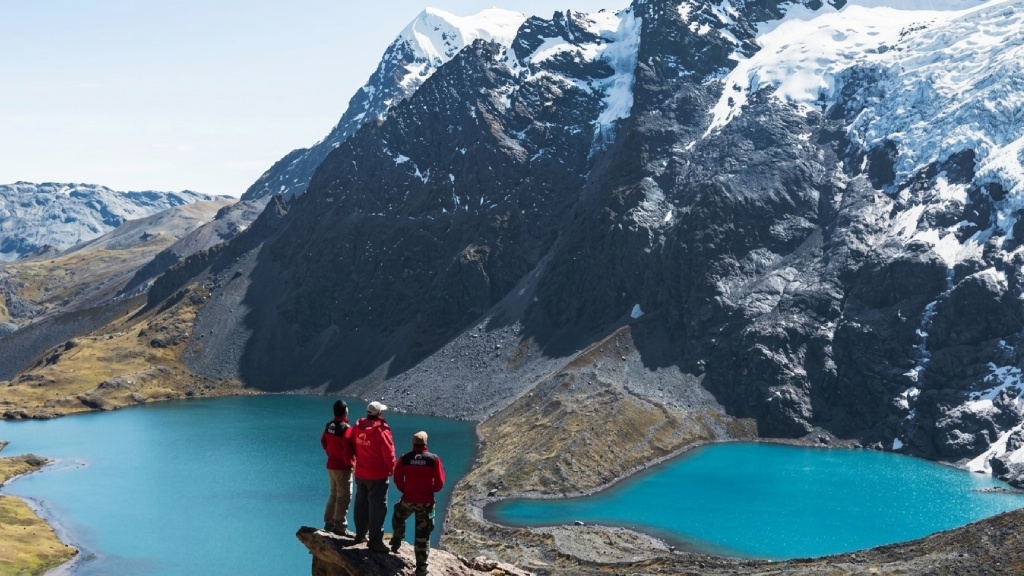
How many days of acclimatization do you need before the Ausangate Trek?
Acclimatization is essential before embarking on the Ausangate Trek, as the route reaches approximately 5,200 meters (17,060 feet) above sea level.
If you’re arriving from a lower-altitude area, it’s recommended that you spend 3 to 4 days in Cusco to allow your body to adjust. During this time, be sure to rest, stay well-hydrated, avoid intense physical exertion, and limit your alcohol consumption.
What are the symptoms of altitude sickness?
The most common symptoms are:
- Headache.
- Nausea and dizziness.
- Unusual fatigue.
- Loss of appetite.
- Difficulty sleeping.
If you experience these symptoms, avoid continuing the ascent and inform your guide. If severe symptoms appear, such as difficulty breathing at rest, confusion, or loss of coordination, you need urgent medical attention and must descend to a lower altitude.
Remember: acclimatization helps reduce the risks, but it does not guarantee that altitude sickness will not occur.
What should you bring for the Ausangate Trek?
Due to the cold, the altitude, and weather changes, it’s important to bring appropriate clothing and gear to enjoy the trek in greater comfort.
We recommend you consider the following items:
- Waterproof and windproof jacket.
- Warm jacket for the evenings.
- Base layer.
- Hiking pants.
- Gloves and hat.
- Hiking socks.
- Change of clothes.
- Comfortable, well-worn hiking boots.
- Small backpack for personal items.
- Hiking poles.
- Sunglasses with UV protection.
- Sunscreen.
- Water bottle or hydration system.
- Headlamp.
- Personal medications, if you take any.
- Toiletries.
- Toilet paper.
- Bags for trash.
- Documents and cash.
When is the best time to do the Ausangate Trek?
The dry season, which generally runs from April through October, typically offers the most favorable conditions for hiking in the Peruvian Andes.
During these months, clear days are more common, and there is less rainfall. However, nights can be very cold, especially at campsites located above 4,000 meters (13,123 feet).
The period between May and September is typically one of the most popular times to do the Ausangate Trek.
On the other hand, the rainy season runs from November through March. During these months, you may encounter rain, wet trails, and conditions that make certain stages of the trek more challenging.
Frequently Asked Questions About the Difficulty of the Ausangate Trek
Is the Ausangate Trek suitable for beginners?
It can be a challenging route for someone with no experience in mountain hiking. Although you don’t need to be a professional mountaineer, it’s recommended that you be in good physical condition, have prior hiking experience, and arrive in Cusco sufficiently acclimated.
What is the most difficult day of the Ausangate Trek?
The third day is the most demanding of the itinerary. It covers a distance of 16.5 kilometers (10.25 miles), takes approximately 9 hours of hiking, and reaches an altitude of 5,200 meters (17,060 feet) at the Palomani Pass.
How many kilometers are hiked during the Ausangate Trek?
This can vary depending on the tour you take; the 5-day Ausangate Trek covers approximately 55.5 kilometers (34.49 miles) spread over five days.
Is trekking experience required?
Experience with multi-day treks is not mandatory, but it is recommended that you have prior hiking experience and be prepared to cover long distances over mountainous terrain.
Is the Ausangate Trek more difficult than the Inca Trail?
There is no absolute comparison, as the difficulty depends on the route, duration, altitude, elevation gain, and each person’s physical condition.
The five-day Ausangate Trek is known for its high-altitude passes, especially the Palomani Pass at 5,200 meters (17,060 feet) and its long daily hikes. To choose between the two routes, it’s best to compare the specific itineraries.
Get ready for the Ausangate Trek
The five-day Ausangate Trek is a high-mountain adventure that combines breathtaking scenery with a significant physical challenge.
Over the course of its 55.5 kilometers (34.49 miles), you’ll traverse Andean valleys, lakes, traditional communities, and mountain passes that exceed 5,000 meters (16,404 feet) in elevation. The most demanding day will be the third, when you’ll reach the Palomani Pass at 5,200 meters (17,060 feet) above sea level.
If you’re in good physical condition, acclimatize properly, and prepare in advance, you’ll be better equipped to tackle this experience.
Would you like to discover the majesty of Apu Ausangate?
At Qosqo Expeditions, we invite you to experience this five-day adventure through the Vilcanota Mountain Range. Contact us to learn more about the itinerary and plan your next trekking adventure in Cusco.